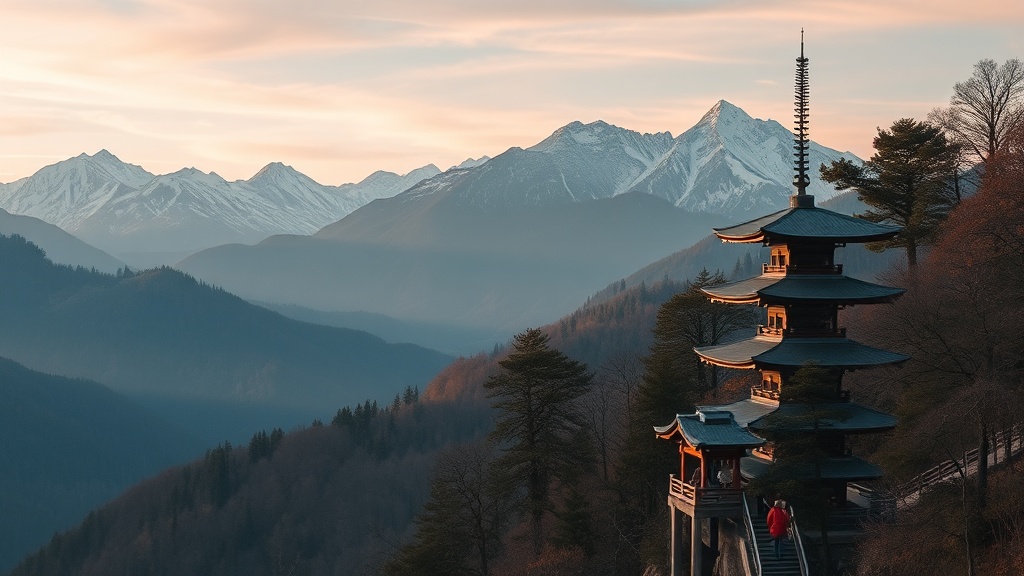
Finding Quiet Magic in the Japanese Alps

Over 70% of Japan's land area is comprised of mountains, yet most international travelers never make it past the neon lights of Tokyo or the shrines of Kyoto. This guide focuses on the Japanese Alps—a rugged, high-altitude region that offers a different pace of life. We're looking at how to plan a trip through Nagano, Gifu, and Toyama, focusing on logistics, seasonal timing, and the specific gear you'll need for mountain-side stays. It matters because the logistics of the Alps are significantly different from the Shinkansen-connected coastal cities.
When is the Best Time to Visit the Japanese Alps?
The best time to visit depends entirely on whether you want to see snow or greenery, but spring (late April to June) and autumn (September to November) offer the most balanced weather for families and couples.
If you're chasing the famous snow festivals or skiing in Hakuba, winter is your target. However, the winters here can be brutal—sometimes reaching temperatures well below zero—which requires a different level of preparation than a standard city trip. For those who want to hike the Kamikochi valley, summer is the only real option.
Autumn is a personal favorite for many of my readers. The colors are striking, but the air is crisp. It's a great way to experience a region known for its dramatic topography without the heavy layers required for a ski trip.
Here's a quick breakdown of the seasons:
| Season | Primary Activity | Weather Vibe |
|---|---|---|
| Spring (Apr-June) | Cherry blossoms & hiking | Mild, unpredictable rain |
| Summer (July-Aug) | High-altitude trekking | Warm valleys, cool peaks |
| Autumn (Sept-Nov) | Fall foliage & photography | Crisp, clear, and cool |
| Winter (Dec-Mar) | Skiing & Onsen soaking | Heavy snow, freezing |
How Do You Get Around the Mountains?
The most efficient way to navigate the region is a combination of the JR Pass for major hubs and local buses for the smaller, more secluded valleys.
While the Shinkansen (bullet train) gets you to the edges of the Alps—like Nagano or Toyama—it won't take you to the heart of the mountain villages. Once you arrive in a base town, you'll rely heavily on local bus lines. These buses are reliable, but they don't run as frequently as the trains in Tokyo. (Don't forget to check the schedules the night before—missing a bus can mean a long wait in the cold.)
For families traveling in a group, renting a car is often the smartest move. It gives you the freedom to stop at roadside stations (Michi-no-Eki) and explore smaller shrines without being tethered to a bus timetable. Just be aware that mountain roads are narrow and winding. If you're not comfortable with tight turns, the driving might feel a bit intense.
If you're staying in a traditional Ryokan, many offer shuttle services from the nearest station. It's worth asking your host about this when booking. It saves a lot of hassle with heavy luggage.
What Should You Pack for a Mountain Retreat?
Layering is the single most important rule for the Japanese Alps because the temperature can drop 10 degrees the moment the sun goes behind a peak.
I always suggest a three-layer system. You don't need a dozen different outfits; you just need the right ones. A high-quality base layer is non-negotiable. I personally swear by the Uniqlo Heattech line for its affordability and effectiveness in lighter hiking scenarios. If you're planning serious trekking, you might want to look into something more heavy-duty like Patagonia or Arc'teryx.
- Base Layer: Moisture-wicking synthetic or merino wool.
- Mid Layer: A lightweight fleece or a down vest.
- Outer Layer: A waterproof shell to protect against sudden mountain showers.
- Footwear: Broken-in hiking boots or sturdy walking shoes with good grip.
One thing people often overlook: footwear. The terrain in these villages is often uneven stone or gravel. A pair of high-end sneakers might work for a stroll through Takayama, but for any real walking, you need traction.
It's also a good idea to pack a portable power bank. Cold weather drains phone batteries faster than usual, and you'll likely be using your phone for navigation or taking photos of the scenery.
How Much Does a Trip to the Alps Cost?
A mid-range budget for a week in the Japanese Alps typically ranges from $1,500 to $2,500 per person, excluding international flights.
The cost varies wildly depending on your accommodation choices. A standard business hotel in Nagano is relatively cheap, but a high-end Ryokan with a private hot spring (onsen) can easily cost $400+ per night. If you're looking for a more special, romantic experience, that's where your budget will go.
Here's a rough estimate of daily costs:
- Low Budget: $60–$80 (Hostels, convenience store meals, local buses).
- Mid-Range: $150–$250 (Mid-tier hotels, sit-down dinners, some private transport).
- Luxury: $500+ (High-end Ryokans, private guides, fine dining).
One way to save is to eat at local "Soba" shops. Soba (buckwheat noodles) is a regional specialty and is incredibly delicious. It's also much more affordable than a full multi-course Kaiseki meal. You can find amazing bowls for a few dollars at local spots in Matsumoto or Takayama.
Don't forget to budget for the "Onsen Tax." Some traditional inns charge a small fee for using the hot springs, and it's a small price to pay for the relaxation it provides.
The Japanese Alps offer a level of quiet that is hard to find in the more tourist-heavy parts of the country. Whether you are walking through the old streets of Takayama or watching the mist roll over the mountains in Kamikochi, the sense of stillness is palpable. It's a place that rewards those who take the time to slow down and actually look at the details.
If you find yourself craving a similar sense of seclusion but with a different aesthetic, you might enjoy reading about quiet villa escapes in Tuscany. The feeling of being tucked away from the modern world is a universal luxury, whether you're in the mountains of Japan or the hills of Italy.