Hidden Tuscan Villas for a Quiet Vineyard Escape

The Rustic Estate in Val d'Orcia
The Cliffside Vineyard Retreat
The Renaissance Manor in Chianti
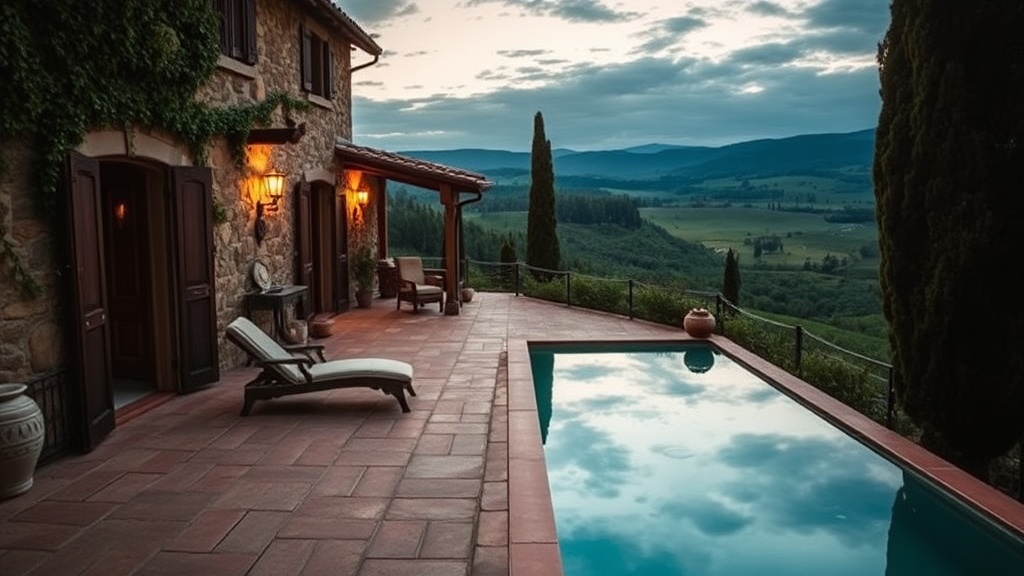
The scent of sun-baked rosemary and damp earth fills the air as the sun dips below the rolling hills of the Val d'Orcia. A single stone farmhouse sits perched on a ridge, its windows glowing with a warm, amber light that signals the end of a long afternoon. This post explores the best secluded villas in Tuscany for travelers seeking privacy over crowds, focusing on properties that offer authentic charm rather than tourist-heavy amenities. If you're looking for a quiet vineyard escape away from the bustling streets of Florence or Siena, these are the destinations worth your time.
Finding true solitude in Tuscany isn't actually that hard if you know where to look—you just have to steer clear of the main highway hubs. Most people flock to the center of San Gimignano or the outskirts of Chianti Classico, leaving the smaller, tucked-away valleys relatively empty. This is where the real magic happens.
Where are the best areas for a quiet Tuscan villa stay?
The best areas for a quiet stay are the Val d'Orcia and the Maremma region, as these spots offer much lower tourist density than the central Chianti region. While Chianti is beautiful, it can get crowded with tour buses during the summer months. If you want to hear nothing but the wind through the cypress trees, head south.
The Val d'Orcia is a UNESCO World Heritage site for a reason. It's a stretch of land that looks exactly like a postcard—rolling hills, golden wheat fields, and endless rows of vines. It's also much more rugged and less "manicured" than the areas closer to Florence. This makes it perfect for a romantic getaway or a slow-paced family retreat where the goal is to do absolutely nothing.
Here are three specific types of properties you'll find in these regions:
- Agriturismo: These are working farms that offer guest accommodations. You aren't just staying in a hotel; you're staying on a functional estate.
- Borgo: These are tiny, ancient hamlets that have been converted into luxury villa complexes.
- Private Estate: These are standalone villas, often with high walls and private gates, offering the highest level of seclusion.
I've personally found that staying at an agriturismo gives you a much more honest look at Tuscan life. You might wake up to the sound of a tractor in the distance, but that's part of the charm. It's real life, not a staged performance for tourists.
For those interested in the historical significance of these areas, the UNESCO World Heritage description for Val d'Orcia provides a deep dive into why this specific topography is so culturally significant.
How much does a luxury villa rental cost in Tuscany?
A luxury villa rental in Tuscany typically costs anywhere from €500 to over €3,000 per night depending on the season and the size of the property. If you are booking a large estate for a group of ten or more, you might find that the price per person actually becomes quite reasonable.
It's a bit of a balancing act. If you book during the "shoulder seasons"—late April or October—you'll save a significant amount of money compared to the July madness. Plus, the weather is actually much more pleasant for walking through the vineyards. It's not quite as stiflingly hot.
| Villa Type | Typical Price (Per Night) | Best For |
|---|---|---|
| Rustic Agriturismo | €250 - €500 | Budget-conscious families |
| Mid-Range Private Villa | €600 - €1,200 | Romantic couples |
| Ultra-Luxury Estate | €2,500+ | Large groups/Multi-generational |
One thing to keep in mind: many of these high-end rentals are managed through specialized agencies. Don't just rely on the big booking sites. Often, the most exclusive, "hidden" gems aren't even listed on the major platforms. You might need to find a local property manager or a boutique agency that specializes in the region.
The "Hidden Gem" List: Three Specific Recommendations
I've spent enough time scouting these hills to know which properties actually deliver on the promise of peace. Here are three distinct options depending on your vibe:
- The Traditionalist: Castello di Spaltenna (near Monteriggioni). This isn't just a hotel; it's a castle. While it's a bit more "known," the outlying villas on the property offer incredible isolation. It's perfect if you want the luxury of a high-end service but the feeling of being tucked away in a fortress.
- The Family Retreat: Borgo di Vagli. If you're traveling with a larger group or family, look for "Borgo" style accommodations. These are often renovated villages. You get the privacy of a house, but you're part of a tiny, controlled community.
- The Romantic Escape: Podere Il Casale. This is a quintessential farm stay. It's small, intimate, and the views of the valley are genuinely life-changing. It's the kind of place where you can sit on a terrace with a glass of Brunello and forget the rest of the world exists.
If you're planning a trip that involves a lot of walking through these hills, I highly recommend investing in a good pair of boots. I used my Patagonia hiking gear extensively during my last trip to the Tuscan countryside, and it made the difference between a blistered foot and a successful hike. The terrain is uneven, and those ancient stone paths aren't forgiving.
What should I pack for a vineyard retreat?
You should pack light, breathable fabrics, a high-quality sun hat, and versatile footwear that can handle both gravel paths and paved roads. The key is to prepare for both the heat of the day and the sudden chill of the evening.
Tuscany is decept-ively unpredictable. One moment you're sweating under a relentless sun, and the next, a breeze rolls off the Apennines and makes you reach for a sweater. I never travel to this region without a medium-weight linen shirt or a light jacket. Even in the height of summer, the evenings can get quite crisp.
Don't forget the basics:
- Sun Protection: High SPF sunscreen and polarized sunglasses. The light in the valley is intense.
- Evening Wear: Something slightly "smart-casual." Even in a remote villa, you'll likely want to look decent if you head into a nearby village for a glass of wine.
- Practical Gear: A sturdy water bottle and a portable power bank. You'll likely be taking more photos than you realize.
It's also worth noting that many of these remote villas don't have high-speed internet. They have "rustic" connectivity at best. If you're planning to work remotely (which I don't recommend, honestly), make sure you check the actual bandwidth or bring a local SIM card with a strong data plan. Don't assume the Wi-Fi will be perfect just because the view is.
"The beauty of Tuscany isn't in the monuments, but in the quiet moments between the landmarks."
I've found that the best way to experience these places is to arrive, unpack, and then simply stop looking at your phone. The more you try to document every single moment, the less you actually experience the stillness. If you're there for a romantic getaway, the goal is connection—with your partner, and with the environment.
Whether you're looking for a high-end estate with a private chef or a simple farmhouse where the only sound is the cicadas, there is a corner of Tuscany waiting for you. Just be sure to book well in advance. The best, most secluded spots tend to get snatched up by the same small group of travelers every year.